

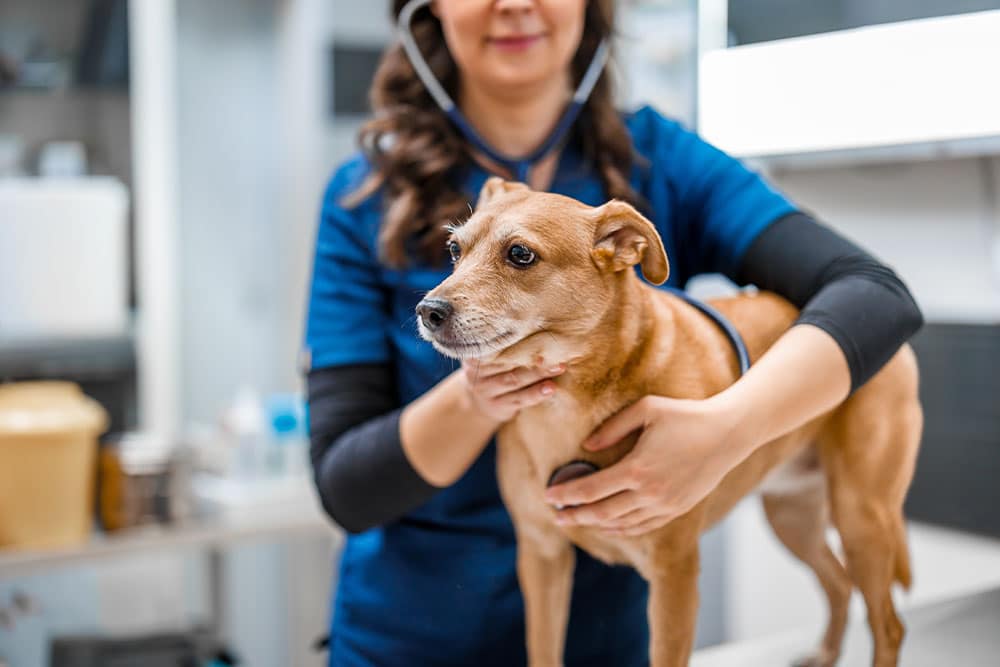
Finding a lump on your dog is a special kind of stomach-drop, especially when it’s a lymph node. Swollen lymph nodes are worth taking seriously, but they do not automatically mean cancer. Lymph nodes enlarge as part of a normal immune response to infection, inflammation, or injury, and the location, size, texture, and whether more than one node is affected all help us tell a reactive node from something more concerning. Lymphoma is one of the most common cancers we see in dogs, so it belongs on the list of possibilities when swelling is widespread or sticks around without an obvious cause. The reason early recognition matters so much is that the most treatable cases tend to be the ones caught before a dog starts feeling really sick.
At Greenfield Veterinary Clinic, our in-house diagnostics let us get answers quickly, often during the same visit. We can run bloodwork, perform cytology on a fine-needle sample from a swollen node, and use ultrasound to look at what is happening internally, all under one roof. If your dog has a lump you have noticed or nodes that feel off, give us a call and we will take a look.
Lymphoma in Dogs at a Glance
- Swollen nodes don’t automatically mean cancer: most enlargement is reactive, a sign the immune system is responding to infection or inflammation.
- Lymphoma is common in dogs: sudden, dramatic, painless swelling of multiple nodes is the classic presentation.
- A fine-needle aspirate often answers it same-visit: definitive subtype identification requires a biopsy.
- Treatment helps many dogs feel like themselves again: good quality of life for months to years is a realistic goal.
What Do Lymph Nodes Do, and Where Are They?
Lymph nodes are little immune checkpoints. They filter lymph fluid, catch pathogens, and signal the rest of the immune system when something needs a response. Most of the time you cannot feel them at all, so when one enlarges, it means a node is actively working on something the body has flagged.
The locations of lymph nodes you can feel from outside sit at predictable spots: under the jaw, in front of the shoulders, in the armpits, in the groin, and behind each knee. These lymph nodes are the same in dogs and cats, and learning where to gently feel for them is one of the most useful at-home health checks you can do. We palpate every accessible node at each wellness visit, which is part of why routine preventive care matters. A node that has been small for years and is suddenly walnut-sized is something you only catch if someone has been checking. For a home check:
- Once a month is plenty, since you are noticing change rather than measuring exact sizes.
- Pet your dog with intention during a quiet moment, feeling each of the five paired locations.
- Compare sides, because asymmetry matters.
- Call us if something feels larger, firmer, or new where you have never felt anything before.
What Is Canine Lymphoma and How Does It Present?
Canine lymphoma is a cancer of lymphocytes, the white blood cells that live throughout the lymphatic system. It often shows up as sudden, dramatic, painless enlargement of multiple lymph nodes in a dog who otherwise seems fine. Many dogs appear entirely well right up until someone notices the swelling. Common symptoms:
- Enlarged lymph nodes, often multiple at once
- Lethargy
- Weight loss
- Decreased appetite
- Visible swelling under the jaw or behind the knees
- Sometimes increased thirst and urination, especially with the high blood calcium some lymphomas cause
Symptoms vary depending on where the lymphoma develops. Multicentric lymphoma, affecting peripheral nodes, is the most common form and presents most predictably, while gastrointestinal, mediastinal, cutaneous, and extranodal forms present differently and may not show obvious node enlargement at all. Accurate lymphoma diagnosis and subtype work shapes the entire treatment and prognosis conversation, which is why thorough early testing matters.
Which Dogs Are at Highest Risk?
Lymphoma is typically attributed to a combination of genetics and environment. Recent estimates suggest 1 in 15 dogs born today will develop it, with Golden Retrievers at significantly higher rates, and the work on lymphoma in Golden Retrievers is worth following if you own one. Other higher-risk breeds include Boxers, Bullmastiffs, Basset Hounds, Saint Bernards, Scottish Terriers, Airedale Terriers, and Bulldogs, and environmental exposures including certain herbicides, environmental chemicals, and secondhand smoke have been associated with elevated risk.
On the diagnostic side, blood-based screening tests can flag at-risk dogs before clinical signs appear, and lymphoma biomarker testing is increasingly available as routine screening for high-risk breeds.
What Else Causes Swollen Lymph Nodes?
Most enlarged lymph nodes that come through our door turn out to be reactive, meaning the immune system is responding to an infection somewhere, whether bacterial, viral, fungal, or parasitic, and whether local or systemic. The table below shows how a reactive node typically differs from a lymphoma node:
| Feature | Reactive (infection) node | Lymphoma node |
| Texture | Often tender, soft to firm | Firm and painless |
| Number | Usually one, near a problem | Often multiple at once |
| Onset | With a known infection or wound | Sudden, no obvious cause |
| Dog’s overall state | Variable, often visibly ill | Frequently seems well early |
Common causes worth ruling out before assuming the worst:
- Tick-borne disease, since Lyme disease is increasingly common in Wisconsin and ehrlichia and anaplasma are worth screening for in any dog with unexplained swelling.
- Bacterial infections, including leptospirosis transmitted through standing water, rodent urine, and wildlife contact.
- Fungal infections, where fungal disease varies regionally and blastomycosis is most relevant here, since the organism lives in damp soil near rivers and lakes.
- Local infections, like dental abscesses, skin infections, or wounds that produce regional swelling that resolves with treatment.
The pattern matters. A single enlarged node near a wound or oral infection behaves very differently from generalized multinode swelling without obvious cause, and telling them apart requires an actual evaluation rather than a wait-and-see approach.
How Is Lymphoma Diagnosed?
Diagnosis moves from broad to specific: the physical exam narrows the field, and targeted testing confirms or rules out the most likely cause. Lymphoma in dogs follows a well-established diagnostic pathway we work through systematically.
Fine-Needle Aspiration and Biopsy
A fine-needle aspiration, or FNA, is usually the first step after the physical exam. We collect cells from the enlarged node with a small needle for evaluation under a microscope. It is brief, minimally invasive, and most dogs do not need sedation. Cytology often answers the question in a single visit: reactive node, infection, or lymphoma. When FNA is inconclusive, when subtype confirmation is needed, or when tissue architecture itself matters, a biopsy is the next step. The cytology versus biopsy decision is case-specific, and we perform lymph node biopsies at our surgical center when indicated.
Bloodwork, Tick Testing, and Imaging
The full workup includes:
- Complete blood count and chemistry panel to screen for systemic infection, organ involvement, and cellular changes like lymphocytosis, anemia, or elevated calcium.
- Tick-borne disease screening, with a same-visit screen plus a send-out confirmation panel.
- Chest radiographs to evaluate the thoracic cavity, internal lymph nodes, and lungs.
- Abdominal ultrasound to assess internal nodes, the spleen, liver, and GI tract.
- Staging that combines these findings to characterize disease extent, which guides treatment and prognosis.
Greenfield Veterinary Clinic’s in-house laboratory and imaging include all the tools needed to properly work up lymphoma, all in one place.
What Are the Treatment Options for Canine Lymphoma?
Chemotherapy options are the mainstay of treatment. The standard protocol is CHOP, combining cyclophosphamide, doxorubicin, vincristine, and prednisone on a rotating schedule over about 19 to 25 weeks, which typically produces remission in roughly 80 to 90 percent of dogs with the most common subtype and median survival around 12 months when completed. Other options:
- Single-agent protocols like doxorubicin alone or simpler combinations for families who prefer less intensive treatment.
- Tanovea, or rabacfosadine, a newer targeted chemotherapy approved specifically for canine lymphoma.
- Prednisone alone as palliative therapy when full chemotherapy is not pursued, with shorter median survival of one to three months but better day-to-day comfort.
One thing worth knowing up front: veterinary chemotherapy is not the same experience as human chemotherapy. Doses are calibrated to minimize side effects while still working, most dogs continue their normal activities throughout, hair loss is uncommon in most breeds, and nausea or mild GI upset is usually manageable.
What Are the Alternatives to Chemotherapy?
For families exploring options beyond conventional chemotherapy, chemotherapy alternatives for lymphoma include:
- Half-body radiation as part of multi-modal therapy in select cases at specialized radiation facilities.
- Monoclonal antibody therapies that target specific markers on lymphoma cells.
- Immunotherapy approaches that harness the immune system against cancer cells.
- Bone marrow transplants in highly select cases at academic centers.
Treatment selection is individualized based on subtype, stage, the dog’s overall health, owner preferences, and what is logistically and financially feasible.
Clinical Trials for Canine Lymphoma
Canine lymphoma has very active research behind it, and clinical trials may open up options for some dogs. Currently active programs include:
- Active clinical trials for lymphoma on the Veterinary Clinical Trials registry
- New drug combination treatments at Colorado State
- Immunotherapy trials at University of Minnesota
- Focused ultrasound trial at Purdue
- Radiopharmaceutical therapy trials at University of Wisconsin, especially convenient for dogs in our area
If a clinical trial is something you want to look into, we can help you understand what is involved and coordinate the records and communication.
Living With and Supporting a Dog With Lymphoma
A lymphoma diagnosis is hard to hear, but most dogs treated for it have months to years of good quality time. A few things help during treatment:
- Monitor for nausea or appetite changes, since anti-nausea medication is part of most protocols when needed.
- Track energy and engagement, as many dogs feel better quickly once treatment starts working.
- Keep weight steady, and flag any weight loss right away.
- Plan for the bad days, since most dogs have one or two days after treatment when they feel a little off.
- Bring your questions to every recheck about side effects, medication adjustments, and what to watch for at home.
You don’t have to keep those questions until the next visit, either. If something feels off between rechecks or you’re just not sure whether a change matters, ask us and we’ll talk it through.
How Quickly Should You Seek Care?
Most lymph node swelling falls into one of three urgency tiers. Come in the same day if:
- Multiple nodes have suddenly enlarged, especially if your dog seems unwell
- A node is hot, painful, rapidly growing, or draining
- Your dog is lethargic, off food, or showing other systemic signs alongside swelling
- A young or unvaccinated pet has node swelling with fever
Schedule a prompt evaluation within 48 hours if:
- You find a single firm enlarged node that does not seem to be hurting your dog
- A node has been slowly growing over weeks
- Your dog is a higher-risk breed and a node has changed
- Your dog had recent tick exposure plus any new lump or symptom
Schedule within the week if:
- A node found during a home check is mildly enlarged but stable
- A previously enlarged node has not changed and a recheck was already planned
When the timing is not obvious, reach our team and describe what you are seeing. We would rather field a call and tell you it can wait than have you sit on something that needs attention.
Frequently Asked Questions About Lymphoma in Dogs
How Fast Does Canine Lymphoma Progress?
Faster than most families expect. Untreated lymphoma typically progresses over weeks to a few months, with affected dogs becoming progressively unwell, while treated lymphoma can produce remission within weeks of starting therapy, with most dogs feeling significantly better quickly. Early diagnosis genuinely changes the trajectory.
Is Lymphoma Painful for My Dog?
The lymph node swelling itself usually is not painful. Lymphoma nodes are typically firm but not tender, unlike infected nodes that often hurt. As the disease progresses to involve organs, more general signs like lethargy, decreased appetite, and weight loss reflect how the dog feels, and treatment generally improves quality of life quickly when it produces remission.
Can Lymphoma Be Cured?
Cure is rare with current treatments. Remission, where the cancer is no longer detectable and the dog feels well, is achievable in 80 to 90 percent of dogs treated with CHOP for the common subtype. The realistic goal is high-quality time rather than cure, which for most dogs looks like months to more than a year of feeling well.
Will My Other Dogs Be at Risk if One Has Lymphoma?
Not from the lymphoma itself, since it is not contagious between dogs. Any risk to other pets in the household comes only from shared environmental exposures that might have contributed, such as tick-borne disease or certain chemicals, rather than from the lymphoma.
Getting Your Dog the Right Care for Lymphoma
Lymphoma moves quickly when it’s left alone, but it’s also one of the most treatable cancers we see in dogs, and early action makes a real difference in how much good time your dog gets. Catching swollen lymph nodes early, confirming the diagnosis, and starting the right protocol are what turn a frightening diagnosis into months or years of comfortable, happy days. We’ll walk through the options with you, explain what each step looks like, and build a plan that fits your dog and your family.
If your dog has been diagnosed with lymphoma or you’ve noticed swollen lymph nodes that need a closer look, request an appointment and we’ll figure out the right next step together.





Leave A Comment